Good morning, Friends. Thank you all for coming today!
I want to read to you from one of the oldest of all stories this morning. This one really takes us back, to the time before time, to when God made all things, and told us how to live.
God created human beings in his own image,
in the image of God he created them;
male and female God created them.God blessed them and said to them, “Be fruitful and increase in number; fill the earth and subdue it. Rule over the fish in the sea and the birds in the sky and over every living creature that moves on the ground.”
Then God said, “I give you every seed-bearing plant on the face of the whole earth and every tree that has fruit with seed in it. They will be yours for food.
And to all the beasts of the earth and all the birds in the sky and all the creatures that move along the ground – that has the breath of life in it – I give every green plant for food.” And it was so.
And God saw all that he had made, and it was very good. And there was evening, and there was morning – the sixth day.
Thus the heavens and the earth were completed in all their vast array.
By the seventh day God had finished the work he had been doing; so on the seventh day God rested from all his work.
Then God blessed the seventh day and made it holy, because on it he rested from all the work of creating that he had done.
Genesis 1:27-2:3
There was a holiday this past week. Most people didn’t pay any attention to. It was Earth Day, and it was last Wednesday. Did anybody here notice it?
Earth Day would seem to be one of the most basic holidays of all. I mean, who would not celebrate and give thanks for this beautiful world we live in?
I remember the first Earth Day that we celebrated in America. It was back in 1970. 56 years ago. Just a year before, the astronauts of Apollo 8 sent back the first pictures of the Earth, taken from the moon. The whole world looked at those pictures.
We saw a round ball, colored like a marble. Floating in space. Surrounded by stars. It was so beautiful, and so lonely. The Earth looked so small, compared to all the heavens around it. If you looked closely, there was just a thin wisp of atmosphere, tiny continents where people live, tiny oceans. And all around us, nothing at all. Just black, empty space.
On that first Earth Day, more than 20 million people – 10% of the population of America – took the day off to clean things up. We looked at all the trash around us, and we decided that we were going to pick it up. The cleanup effort was so important that the President’s wife was the symbol of it.
In the year that followed, Congress passed and the President signed landmark legislation – creating the Environmental Protection Agency, passing the Clean Air Act, the Clean Water Act, and the Endangered Species Act.
I remember, that first Earth Day, the town in my home state passed out trash bags to anyone who participated. I walked both sides of the country road where I lived, between the houses of my two sets of grandparents.
Just a quarter of a mile, and I remember I picked up seven huge bags of trash. Bottles, beer cans, paper bags, just things that people threw out their car window, driving down the road.
People can learn. People can change. My home state passed a 5¢ bottle deposit law, and people there don’t toss cans on the roadside any more. I still walk that same quarter-mile, every year, when I’m home. Last summer, on that same stretch, I only picked up two cans. Two cans, from the whole year I was away. That’s the way it’s supposed to be.
We’re not supposed to throw our trash out the window everywhere we go. That’s not the reason God gave us this beautiful world. Throwing out trash like that, to me, is kind of an insult to God. It’s throwing it back in God’s face.
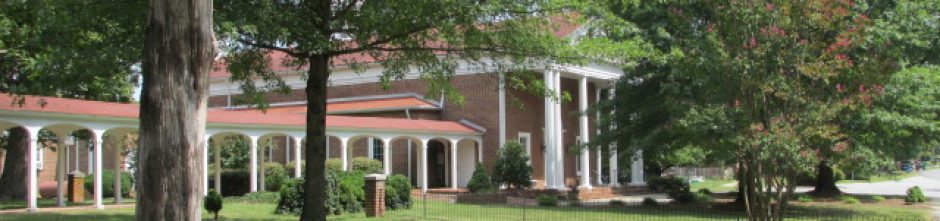
Some of you know that I walk up and down the road here at Springfield at least once every month. I put on my yellow vest, and my gloves and my grabbers. Takes me about an hour, every month.
I pick up a minimum of three big black bags of trash, twelve months a year. Every month, that’s between 60 and 80 pounds of stuff people just throw away. Every year, it adds up to more than 1,000 pounds – half a ton – of human waste. In the years I’ve been here, that’s more than 10 tons of cans, bottles, styrofoam containers, fast food waste, and everything you can imagine.
Thousands of plastic bags. Thousands of plastic straws. Thousands of containers of ketchup and mustard and BBQ sauce that people took and never even opened.
It really says something about our society. Not just that we throw away all this stuff, but that we MAKE all this stuff, just to use it once and then throw it away.
I’ve picked up tires, car batteries, car bumpers, and pieces of cars from where people were driving too fast or driving drunk and ran off the road. I could do market research on the most popular brands of alcohol sold in this part of North Carolina.
Clothing, diapers, PPE, stuff too disgusting for me to mention here in a sermon. All thrown out along the road or into the woods, here on our little 22 acres of God’s green earth here at Springfield.
I saw a sign once on the internet. And I’ve been really tempted to have copies made and post them along the road here. The sign says, “Reasons I’m a litterbug: #1- I’m a jerk. #2 – I hate everybody! #3 – My mommy still picks up after me. #4 – All of the above.”
If you ever see a sign like that, posted anywhere in the neighborhood, you’ll know it’s me.
Because it really starts with us, in a very concrete way. We are the stewards of our little place on earth. Because – WE HAVE NO OTHER EARTH than the one we live on.
The earth itself will still be around, long after we are gone. But what kind of shape will it be in? What will it be like for our grandchildren, and for all the children not born?
And what are we going to do about it?
In today’s reading, it says, “God looked at what God had made, and it was very good.” There wasn’t all the environmental waste. There wasn’t any mining, or drilling, or data centers, or landfills. Everything was really good, God thought.
The seas weren’t full of plastic and runoff. The skies were clear blue, and didn’t smell like exhaust smoke. That’s all on us.
It says that God made this world to be a garden. Not a trash heap. But a garden, a showcase for all the wonderful things that God made, in all their infinite variety. And it was VERY GOOD!
And we – human beings – were made in the image of God. Both male and female human beings, equal in God’s image.
(All that nonsense about men being superior, and women being second class – that came later. It was the consequence for human failure and disobedience. God didn’t make us that way.)
But God said, ““Be fruitful and increase in number; fill the earth and subdue it. Rule over the fish in the sea and the birds in the sky and over every living creature that moves on the ground.”
I want to talk about that word “subdue” for just a moment. Because it’s caused a huge misunderstanding.
The Hebrew word here is kavash. Kavash can mean to defeat your enemies, and beat them down, and do cruel things to them.
That’s certainly been the way we’ve treated the earth and all the other living things in it, a lot of the time. We’ve treated the world like it’s our property, and we can do whatever we like with it, and damn the consequences.
And along with that interpretation, is the attitude that we can do whatever we want, even to our fellow human beings, if we think they’re in our way, if they’re keeping us from getting whatever we want. That’s how a lot of people have interpreted this verse. And the results have been disastrous.
But “subdue” really isn’t a good translation. A better meaning of kavash is to govern wisely, to be careful stewards. In places in the Bible where God is described, kavash can mean to protect the poor and the powerless.
God subdues whoever would destroy. God subdues whoever spreads terror, whoever takes away what belongs to people who God protects.
That’s a whole different interpretation. We hear the word “subdue” and we think it means, “Drill, baby, drill!” But it doesn’t. It doesn’t mean that we can throw trash everywhere. It doesn’t mean we can burn whatever we like.
It means that our job is to protect this beautiful world. It means that we respect God’s incredible creation. We are responsible for how the world is treated.
There are a couple of other important parts of the story. Maybe you remember that God saying, “I give you every seed-bearing plant on the face of the whole earth and every tree that has fruit with seed in it. They will be yours for food.”
(This is how we know that God sometimes acts like a mother, saying, “Eat your vegetables!”
It’s right there in the Bible.)
But the other really important part of today’s reading says that after all of the immense work of creating an entire world, in six unbelievable days, that God rested.
God Almighty, the Maker of Heaven and Earth, took a whole day off, stopped work, blessed everything, and said that the whole world and everything in it is holy.
And we’re supposed to do the same. We weren’t made to work ourselves to death. If God Almighty can take a full day off, then so can we.
God told us to take an actual sabbath, at least once a week, for our own good and for the good of the earth.
Work can begin again the next day, but once a week, we need to turn things OFF – don’t shop, don’t burn, don’t waste, don’t build, don’t drive 600 miles, don’t watch electrons chasing each other around on a screen. And don’t make anyone else do these things.
The Sabbath is a protest against working too hard. And sabbath is a quiet rebuilding of the way God’s world needs to be.
So: don’t be a litterbug. Do what you can to clean things up, and keep them clean, for generations to come.
We’re here to be stewards. To be caretakers. To protect this world, and all of the beautiful life that God created.
And take time off, at least once a week, to give thanks to God, to praise God, and to rest and to rejoice that we share this world together.